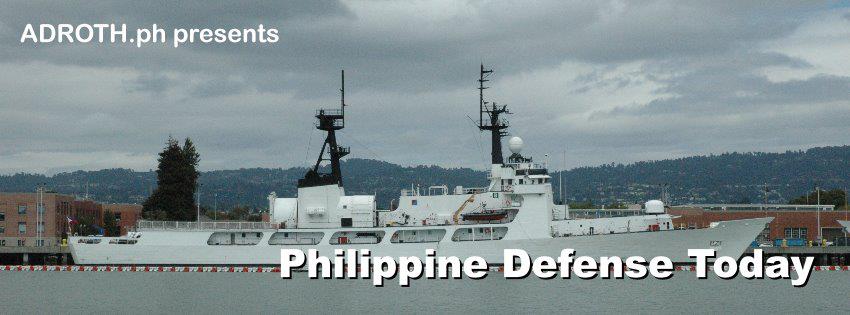
Philippine Defense Today (Adroth.ph)
In Defense of the Republic of the Philippines6th death anniversary of PAF fighter capability
Friday , 16, September 2011 AFP modernization, F-5, Philippine Air Force Leave a commentOn the 28th of September, 2005, went into history as the day the Philippine Air Force completely lost all vestiges of fighter capability. Although S211 trainers were later pressed into combat roles as part of Project Falcon, and painted air superiority grey, the retirement of the long suffering F-5A/B “Freedom Fighters” was the end of an era.
The following article marks the passing of these birds.
PAF to retire F-5 fleet
By Ding Cervantes
The Philippine Star 09/29/2005http://www.philstar.com/philstar/news200509299901.htm
FLORIDABLANCA, Pampanga — Goodbye, “Freedom Fighters.”
The Air Defense Wing of the Philippine Air Force at Basa Air Base here is retiring this Saturday the remaining fleet of F-5 supersonic jet fighter-bombers, referred to as “Freedom Fighters,” in ceremonies befitting their historic 40-year role in the country’s air defense.
The “Freedom Fighters” were also flown by the Blue Diamond aerobatics team, captivating the public in spectacular air shows during public events, including presidential inaugurations, since they were first acquired by the government from the United States on Aug. 27, 1965 under the Philippine-US military agreement. Their last air show was in 2002 at the Clark special economic zone.
Capt. Ephraim Suyom, spokesman of the Air Defense Wing, said the decommissioning rites will be held at the 431st maintenance hanger at Basa Air Base, with Lt. Gen. Jose Reyes, Air Force chief, as guest of honor.
Highlighting the ceremonies will be the final taxiing and engine shutdown of F-5 No. 191 by Brig. Gen. Manuel Natividad, commander of the Air Defense Wing, Suyon said.
To be decommissioned are 10 F-5s, the only ones which have remained operational out of the 37 acquired by the government from the US from 1965 to 1998, he said.
Suyom said Philippine authorities agreed to decommission the F-5s due to difficulties in maintaining the single-seater supersonic aircraft.
< Edited >
BRP Quezon to take part in gunnery exercises
Tuesday , 13, September 2011 BRP Quezon (PS-70), ex-USN Auk class, Philippine Navy, Ships Leave a commentBRP Quezon, an ex-US Auk class ship, will take part in gunnery exercises off the coast of Cabra Island, as per the following Philippine Coast Guard Notice to Mariners ([url=http://www.coastguard.gov.ph/index.php?option=com_content&view=category&layout=blog&id=57&Itemid=124]NOTAM[/url])
Notice to Mariners No. 160-2011
Notice is hereby given to all mariners and other parties concerned that:1. Reference: Philippine Navy Radio Message Cite NOCB-0911-110
2. The Philippine Navy vessel PS70 will conduct Naval Gun Test Firing on September 16, 2011 from 10:00 A.M. to 5:00 P.M. at vicinity 21 Nautical Miles Northwest off Cabra Island or at the following coordinates:
< Edited >
3. In this connection, all ships/watercrafts transiting the vicinity of the abovementioned areas are advised to take necessary precautionary measures.
4. The cooperation of all concerned in effecting widest dissemination of this information is requested.
PG-389 to take part in gunnery exercises
Tuesday , 13, September 2011 Andrada class patrol gunboats, BRP Teotimo Figuracion (PG-389), Philippine Navy, Ships Leave a commentBRP Teotimo Figuracion, an Andrada class patrol gunboat, will be conducting a gunnery exercise off Sarangani province this month. Details available on the following Coast Guard Notice to Mariners (NOTAM)
Notice to Mariners No. 158-2011
Notice is hereby given to all mariners and other parties concerned that:
1. Reference: Philippine Navy Radio Message Cite NOCB-0811-199
2. The Philippine Navy Vessel PG389 has re- scheduled the conduct of her Naval Gun Test Firing from August 14, 2011, as per Notice to Mariners No.144-2011, to September 14, 2011 from 8:00 A.M. to 5:00 P.M. at vicinity 6.7 Nautical Miles Southwest off Bacud Point, Kiamba, Sarangani Province or at the following coordinates:
< Edited >
3. In this connection, all ships/watercrafts transiting the vicinity of the abovementioned areas are advised to take necessary precautionary measures.
BRP Bagobo (AT-293) to test her guns at sea
Wednesday , 7, September 2011 BRP Bagobo (AT-293), LCU Mk.6, Philippine Navy, Ships Leave a commentThe BRP Bagobo, an ex-US Mk.6 Landing Craft Utility (LCU), will be conducting a gunnery exercise off Zamboanga City, as per for the following Philippine Coast Guard Notice to Mariners (NOTAM)
Notice To Mariners No 155-2011
Notice is hereby given to all mariners and other parties concerned that:
1. Reference: Philippine Navy Radio Message Cite SCDO-0811-224
2. The Philippine Navy Vessel AT293 will conduct Test Firing of her Naval Guns on September 01, 2011 from 8:00 A.M. to 5:00 P.M. at vicinity 10.3 Nautical Miles Northwest off Tulnalutan Island, Zamboanga City or at the following coordinates:
< Edited >
3. In this connection, all ships/watercrafts transiting the vicinity of the abovementioned areas are advised to take necessary precautionary measures.
4. The cooperation of all concerned in effecting widest dissemination of this information is requested.
Re-arming the BRP Gregorio del Pilar
Friday , 2, September 2011 Philippine Navy, Uncategorized, WHEC Leave a commentThe following is an excerpt from an ongoing discussion about armament options for the PF-15. This was written by this blog’s owner. This discussion can be found here:
http://www.timawa.net/forum/index.php?topic=28716.msg285987#msg285987
===== ~~~ =====
It would make sense to rationalize these weapons suggestions by matching them with specific objectives. Once that is accomplished, we can actually classify these suggestions into interim, mid-term, and even long term systems.
IMHO, the following categories make sense:
- Point defense – these would defend the PF-15 against asymmetric threats (e.g., terrorists on small boats that intend to mount a USS Cole-type attack)
- Sub-surface engagements – for defense against submarines, mines, et. al.
- Surface engagements – for defense against hostile ships, boats, et. al. that use more conventional naval combat weapons and tactics
- Air defense – defense against aircraft and ASMs
Point defense
If we go by how the PF-11 is armed, these would arguably be .50 cal machine guns, and 20mm Oerlikons on the bow, stern, and amidships. If available, 25mm chainguns, like what some Andradas have, could also be employed.
Presumably, these are minimum requirements for the PF-15 to operate in our pirate infested waters (imagine the scandal of having pirates board . . . and God forbid take over . . . the PN flagship). So these could probably be installed during this 30-day dry-dock period, and would likely be retained moving forward.
Sub-surface engagements
Given the time available, we probably won’t see this on the PF-15’s first sortie and will have to wait for a future upgrade program.
However, as horge astutely points out, the PF-15 can actually acquire this capability before that above-mentioned upgrade . . . if we choose the right helicopter:
http://www.timawa.net/forum/index.php?topic=28024.0
While the embarked helicopter will be an integral part of the PF-15’s suite of capabilities, it is actually a separate acquisition and can lend PF-15 action options that it wouldn’t have by itself . . . till an upgrade program . . . and presumably after the other two WHECs arrive to temporarily relieve it of patrol duties.
Future options for ship-board weapons options may include Mk.46 torpedoes on deck launchers. But that would probably depend on where the sonar suite will eventually be mounted. Will the future upgrade include the reattachment of the sonar dome on the bow? Will ASW capability be reserved entirely for an ASW-capable helicopter that can both detect and engage targets independently?
No data in this regard yet. Only time will tell.
Surface engagements
At this point, the main surface-target engagement weapon is the Oto Melara 76mm in tandem with the Mk.92 FCS (See here).
The space vacated by the CIWS on the fantail, however, could be leveraged to beef-up this capability.
In the short term, the main gun could be supplemented by a 40mm Bofors. This is a quick win, and while we do not have official confirmation that it would indeed be done, there is historical precedent for this action — as Manokski pointed out with past WHECs — and is quite doable given the availability of guns in the inventory. This gun would also provide the PF-15 with a limited daylight-only air defense capability.
Medium term, the MSI gun with Spike missiles, IMHO, would make sense. Although the gun at the start of the thread falls in the same category as the MSI gun, already-existing training and logistical support for the MSI system makes it the logical choice. This adds eyes-in-the-back as well as a modest punch that is at least at par, if not greater, than what can be done with 76mm shells.
Long term . . . we could be looking at missiles in the Harpoon, Hae-sung, or Gabriel class, along with upgrades to the Mk. 92 FCS to allow for more than just gun-only operation (assuming that hasn’t already been done).
Caveat: No data available about whether or not the Hae-sung or Gabriel can work with the Mk. 92 FCS.
On the Mellon missiles was mounted behind the 76mm gun. Presumably the same could be done for our WHECs. Once mounted, the fantail space could be turned over to another function (see below)
Like the sub-surface engagement systems . . . the right helicopter could jump start this capability.
Air defense
As mentioned earlier, the addition of the 40mm Bofors would provide a limited capability that could be added immediately. This system, however, would be inadequate for modern threats and would have to be replaced sooner than later. For now . . . it would be better than nothing.
If the long-term option above is ever taken, and the MSI RCWS, or its equivalent, is judged to be redundant in light of the embarkation of true ASMs, the stern weapons station could be freed up for an alternative air defense system.
The replacement system would depend on a variety of factors, from how the PN intends to deploy the PF-15, to what additional sensors are added to the ship. Something like an EADS TRS-3D, for example, would arguably extend the range at which we could detect targets and thus give us the option to go beyond Mistrals and similar IR-based systems. Upgrades to the Mk.92 FCS would also play a factor.
Sustainable weapons manufacture in the Philippines
Friday , 2, September 2011 Self-Reliant Defense Posture Leave a commentSustainable weapons manufacture is the result the buildup of a wide variety of in-country capabilities. The presence of engineers and the like are merely one of the requirements.
All of the countries that manufacture their own weapons have one thing that we do not: “A well established manufacturing base”. The presence of either a civilian, for-profit, manufacturing base, or a well-funded state-run monopoly, ensures that many of the logistical requirements required to sustain a manufacturing venture are already readily available: surplus electrical power, established means of collecting raw materials, managerial skills, etc.
Although the US’ own capacity to make goods for its own citizens has been eroding for quite a long time, it still enjoys windfall benefits from its days when it was the “factory of the world”. Now that title has moved to China, which is rapidly developing its own weapons manufacturing capability.
One could say that the following is a list of requisites for having one’s own Military-Industrial Complex:
- Technical know-how
- Manufacturing base
- Demand
- R&D capacity
Technical know-how. People who tout that the Philippines has an abundance of engineers and skilled laborers, and point to that as proof that the Philippines can make its own weapons, are partly correct. You do, after all, need people who know how to do the work. But you also need other “classes” of workers to make a manufacturing venture viable. For example, you need skilled managers who keep workers working, and happy. You won’t be producing anything if your workers are always on strike. You will also need Industrial Engineers and Accountants to ensure efficient operations; suitably qualified human resources and training personnel to hire, train; and then retain skilled labor, etc.
Arguably, this is the easiest part of the jigsaw puzzle to address.
Manufacturing base. If weapons manufacturing were a birthday cake . . . this is the cake itself. Everything else is really just icing. Without the equipment, machinery, et. al. to produce the goods, then you have nothing.
If you do not have existing facilities, then you will need capital to acquire the equipment, the real estate for plant facilities, et. al. This will cost you billions, if not trillions, of pesos. Some sources put the Philippines’ outstanding debt at P1.46 Trillion. If the Philippine government were to shoulder the cost of establishing state-run weapons manufacturing facilities, then you will be adding to that.
The key, therefore, will be to attract private investment.
Private investment will require access to credit. Credit will only be available if there is a viable business plan to ensure that the company will have a steady income stream to be able to pay back the loans. This brings us to the next point.
Demand. The AFP will not, and cannot, keep buying a particular weapon for forever. It only needs a finite amount of aircraft (previously published numbers for multi-role fighters, for example, only put the PAF’s need at 24 aircraft), only consumes a specific amount of ammunition per year (higher figures for small arms which is why we have the government-owned and run Government Arsenal, but less for cannon calibers from 20mm and higher), and so on.
This presents a problem to the manufacturing company: “How can the company generate income to continue manufacturing and pay its workers when the AFP’s needs have been met?”
This is actually the problem that Asian Armored Vehicle Technologies Corp., the local assembler of the GKN Simba, faced after the Philippine Army accepted all the Simbas that they were prepared to buy. With nothing else to do . . . the company folded.
One way to ensure survival would be to forecast the AFP’s periodic need, factor in a reasonable profit to cover wages and maintenance of equipment, and then charge the Philippine government a per-unit cost for the item that covers all of the company’s expenses. This is essentially what happened to the US with the B-2 bomber — which is the single most expensive airplane in the world. Total cost of production was divided between only a handful of bombers resulting in a US$2B price tag. Had the production run ran to the original projected number of 137, the per-unit cost would have been lower.
If we did this with artillery rounds, for example, then we could end up with the most expensive ammo in the world. You would get more bang-for-our-buck if we simply imported ammo in this case.
Legendary Philippine combat boot maker, Ang Tibay, which had been supplying boots to Philippine soldiers since before World War II, eventually folded up shop, partly because the AFP found it cheaper to buy its boots from suppliers who sourced their boots overseas. (The company was also saddled by a host of internal problems, not the least of which was government take over, and mismanagement).
A better way would be to produce products for export, thereby allowing the AFP to benefit from economies of scale. The per-unit cost would be driven down by foreign sales. The downside, of course, is that we would be competing with dozens of already-existing manufacturers that already have customer loyalty, brand recognition, and established track records. This had been AATV’s plan, to be the Simba retailer for Southeast Asia. When no buyers came . . . game over.
Getting a bank or consortium of banks, to fork out the funds for a military venture that is focused on supplying the AFP will be difficult at best.
===== ~~~ =====
If we look at the various that have dabbled in SRDP, and survived, we will see that the key to survival is actually outside the AFP. Their military manufacturing ventures are not their principal object of business, but are instead opportunistic ventures. Take the following companies for example:
Steelcraft. This company has been trying to sell armored fighting vehicles to the AFP since the mid-80s, and has yet to succeed for various reasons (e.g., design shortcomings, procedural issues, etc.). Despite over 20 years of . . . lack of success . . . the company remains viable and it continues to try. It is able to do this because its core business is actually in steel manufacture. The owners view their efforts to sell armored vehicles to the AFP as a kind of expensive hobby.
Floro International Corp – this company manufactured the Mk9 sub-machinegun issued to NAVSOG, acts as a dealer for a number of offerings from Singapore Technologies, and offers a variety of defense products. The bulk of its business interests, however, remain outside the military sphere, from photo-reproduction, to the supply of office systems.
Armscorp. This is one of the original Marcos-era SRDP companies, and is engaged in weapons and ammunition manufacture. While still selling to the PNP, and to some extent the AFP, its principal market is the civilian gun market, both in the Philippines and abroad.
Filipinas Fabricator Sales, Inc. This company recently teamed up with Colorado Shipyard to win a bid to manufacture assault watercraft for the Philippine Army riverine battalion. In the mid-90s, this company forged a partnership with Hatch & Kirk, Inc. to replace the aging power plants of several World War II-era Philippine Navy boats giving these boats a new lease on life. Its bread-and-butter, however, does not appear to be with the AFP, and is instead in other ventures to include marine power generation.
R&D capacity. This is the true test of a company’s viability. The ability to continue to improve existing products, and anticipate future needs. This requires deep pockets since not every research venture results in a viable product, so the company must be willing to throw money away to investigate potential dead ends. Failure to innovate could very well spell the end of the company.
The story of the South African Rooivalk helicopter is food for thought: http://www.timawa.net/forum/index.php?topic=9475.0
The Philippines needs to be selective about the weapons that it chooses to produce for itself.
PG-853 to test fire its guns
Thursday , 1, September 2011 BRP Sulpicio Fernandez (PG-853), Conrado Yap class Leave a commentBRP Sulpicio Fernandez, an ex-South Korean Conrado Yap class patrol boat, will be taking part in a gunnery exercise off the coast of La Monja Island, as per the following Philippine Coast Guard Notice to Mariners (NOTAM)
Notice To Mariners No 150-2011
Thursday, 25 August 2011 11:26
Notice is hereby given to all mariners and other parties concerned that:
1. Reference: Philippine Navy Radio Message Cite NOCB-0811-215
2. The Philippine Navy vessel PG853 will conduct Test Firing of her MK16 20MM twin barrel on August 30, 2011 from 7:00 A.M. to 12:00 N.N. at vicinity 4 Nautical Miles Southwest off La Monja island, or at the following coordinates:
< Edited >
3. In this connection, all ships/watercrafts transiting the vicinity of the abovementioned areas are advised to take necessary precautionary measures.
4. The cooperation of all concerned in effecting widest dissemination of this information is requested.
Navy rescues vessel in distress off Tawi-Tawi
Thursday , 1, September 2011 BRP Miguel Malvar (PS-19), PCE, Philippine Navy Leave a commentBy Mindanews | Wednesday| August 31, 2011
http://www.mindanews.com/top-stories/2011/08/31/navy-rescues-vessel-in-distress-off-tawi-tawi/
ZAMBOANGA CITY (MindaNews/30 August) – Task Force 62 of the Naval Forces Western Mindanao (NFWM) has rescued a wooden-hull vessel in distress in the province of Tawi-Tawi, belated reports from the Philippine Navy said.
Commodore Armando Guzman, NFWM commander, said the vessel loaded with 67 people, including the seven crew, was rescued Thursday 4.8 nautical miles off Pagasinan, Simunul, Tawi-Tawi. Of the 60 passengers, 12 were children, he added.
< Edited >
The NFWM’s Naval Task Force 62, which is based in Panglima Sugala town, upon receiving a distress call from the M/L Virginia, directed the [b]Patrol Ship-19 (PS-19)[/b] to conduct search and rescue operation for the distressed vessel amidst rough seas and strong winds prevailing in the area, Guzman said.
Battered by big waves, he said the vessel was listing on its port side while its crew members were “bailing out” water using pails in attempt to trim the vessel when the task force personnel aboard PS-19 arrived.
< Edited >
Guzman said the PS-19 personnel led by Commander Ernesto Baldovino immediately rendered necessary assistance to the vessel. The PS-19 towed M/L Virginia, which arrived safely at Lamion Pier in Bongao. (MindaNews)
PF-15: An ABS-CBN interview with VADM Alexander Pama
Tuesday , 23, August 2011 Philippine Navy, WHEC Leave a commentAn interview with the Flag Officer In Command (FOIC) of the Philippine Navy, explaining why the ex-USCGC Hamilton was chosen, and what it brings to the table.
Key data points in the interview:
@1:40: Getting two more WHECs. Resources are available, negotitations already ongoing
@3:39: The importance of the ability to handle sea-states that our existing assets cannot handle
@7:19: The PF-15 will spend approximately a month in drydock, as per the following PhilGEPS entry
BRP Gregorio del Pilar left Alameda on the 18th of July, 2011. She cast off at 1718H, and was underway by 1738H. The PN flagship is expected to make her first stop in Hawaii on July the 27th before proceeding to Guam, and then the Philippines.
After her arrival in the Philippines, she may spend additional time in drydock, as the following Philippine Government Electronic Procurement System (PhilGEPS) entry indicates. Presumably this is when she will be repainted in standard Navy gray.
From:PhilGEPS
| Reference Number | 1555125 | |
| Procuring Entity | AFP – BIDS AND AWARDS COMMITTEE | |
| Title | Drydocking and Other Related Repairs of BRP GREGORIO DEL PILAR (PF15) | |
| Area of Delivery | ||
| Solicitation Number | GHQ BAC1 PB-287-PN-11 | |
| Trade Agreement | Implementing Rules and Regulations | |
| Procurement Mode | Public Bidding | |
| Classification | Goods | |
| Category | General Repair and Maintenance Services | |
| Approved Budget for the Contract | PHP 47,914,544.42 | |
| Delivery Period | 30 Day/s | |
| Client Agency | ||
| Contact Person | EDNA BUENAVIDES MALONZO Analyst Phil Navy & Modernization Projects 3rd Flr Bulwagang Syquio, Camp Gen. Emilio Aguinaldo, Quezon City Metro Manila Philippines 1100 63-2-9116001 Ext.6487 63-2-6485 malonzo499@yahoo.com.ph |